Classical Ballet Steps
From A to Z: Explored Classical Ballet Steps
Classical ballet is an artistic discipline that combines technique, elegance and expression. Each movement is carefully designed to tell stories, convey emotions and challenge the physical limits of the dancer. From the basic steps to the most complex combinations, ballet has a universal language that can be explored alphabetically.
In this article, we present a complete guide to classical ballet steps, organized from A to Z. Whether you are a beginner, an advanced student or simply passionate about this beautiful dance, this list will serve as an essential reference. Get ready to immerse yourself in the fascinating world of ballet!
1. A
- Adagio: Slow, soft and sustained movements that require control, strength and balance.
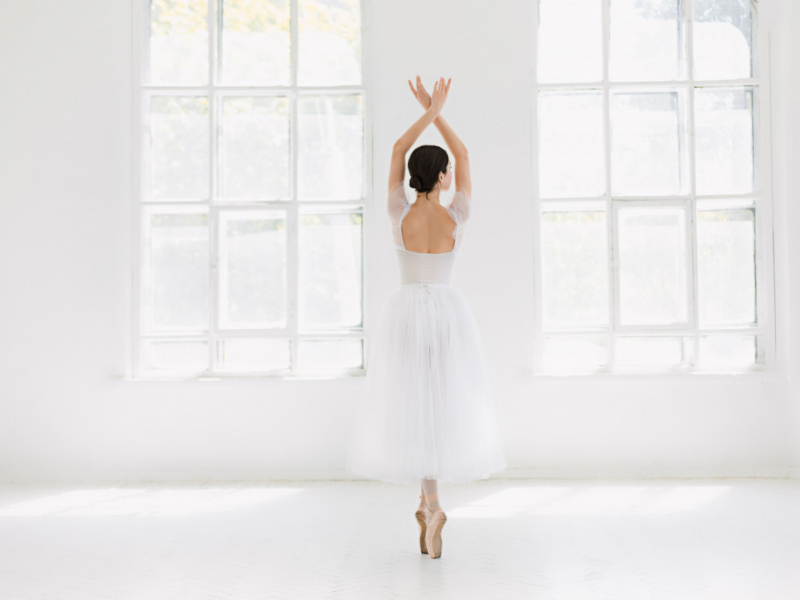
- Arabesque: The dancer holds a leg extended backwards while maintaining an elongated line with the torso. The support leg is stretched, and the arms are positioned harmoniously.
- Assembly: A jump in which both legs come together in the air and land in fifth position.
- Attitude: Similar to the arabesque, but with the raised leg bent at an angle.
2. B
- Balance: Swinging step, alternating the weight from one foot to the other with fluid movements.
- Balloon: The dancer's ability to "float" or bounce lightly during jumps.
- Battement: Movement in which the leg performs a controlled blow or stretch.
- Brisé: Small jump where one leg hits the other in the air.
3. C
- Cabriole: A jump where one leg is thrown into the air and the other hits in a scissor movement.
- Chaînés: Fast turns made in sequence, either in a straight line or in a circle.
- Changement: Vertical jump where the legs change position in the air.
- Chassé: Sliding step where one foot "chases" the other.
- Coupé: A small cutting step, used as preparation for another movement.
4. D
- Développé: The working leg unfolds in the air from a bent position to a full extension.
- Demi-plié: Middle flexion of the knees, fundamental for the technique.
- Derrière: Movement backwards.
- Devant: Forward movement.
5. E
- Échappé: Movement in which the feet "escape" from a closed position to an open one (in a jump or on the ground).
- In arriére: Movement backwards.
- En avant: Forward movement.
- En croix: Execution of movements in the form of a cross: in front, to the side and behind.
- In dedans: Circular movement inward.
- In dehors: Circular movement outwards.
- In face: Position where the dancer is facing the audience.
6. F
- Fondu: The support leg bends gently, imitating the effect of "melting".
- Fouetté: An advanced turn where the leg makes a fast and coordinated movement.
7. G
- Glissade: A sliding step that connects other movements.
- Grand Jeté: Impressive jump where the legs extend in the air in the form of a split.
8. J
- Jeté: Jump that throws the work leg forward or to the side.
9. M
- Pas de Marche: Elegant walk on tips or demi-tips, with fluid movements.
10. P
- Pas de Basque: Step that combines a rond de jambe and a slide to close in fifth position.
- Pas de Bourrée: Series of small quick steps in sequence.
- Pas de Chat: Jump similar to a "cat jump", where one leg follows the other in the air.
- Passé: The working leg passes through the knee of the supporting leg.
- Pirouette: Turn on one leg, executed in dehors or in dedans.
- Pli: Knee flexion, essential for any movement.
- Port de Bras: Controlled and expressive movement of the arms.
11. Q
- Quatrième Devant: Position where the leg extends forward in fourth position.
12. R
- Relevé: Elevation on the fingers or demi-tips.
- Rond de Jambe: Circular movement of the leg, either on the ground (à terre) or in the air (en l'air).
- Révérence: Final bow of the dancers to thank the audience or the teacher.
13. S
Sauté: Simple jump that starts from two feet and lands in the same position.
Sissonne: Jump that starts from two feet and lands on one.
Soutenu: Turn where the legs cross gently.
14. T
- Temps Levé: Jump where the dancer stays on one foot.
- Tendu: Movement in which the foot stretches along the ground.
- Tour en l'air: Turn in the air, where the dancer makes a full turn or more before landing.
15. V
- Pas de Valse: Rotating movement, elegant and fluid made in three steps.
16. Z
- Pas de Zéphyr: Delicate and rotating jump in which the dancer lands with grace and control.
Conclusion
Classical ballet is composed of a rich and structured vocabulary that has been perfected over the centuries. Each step, from the simplest like the Plié to the most challenging like the Grand Jeté, offers a unique technical and artistic challenge. This alphabetic guide not only organizes ballet steps in an accessible way, but also celebrates the beauty and precision that make this discipline a timeless art.
Wher you are a student, a teacher or simply a ballet lover, exploring and practicing these steps will help you develop a greater understanding and appreciation for this art form. Keep practicing, enjoy the process and let yourself be captivated by the magic of classical ballet.
The Children's Classic Ballet: integral development through dance. Read article.
Share this content