Rome Opera
The Opera of Rome, also known as Teatro dell'Opera di Roma, is one of the most emblematic and ancient theaters in Italy. His history, his productions and his role as a promoter of performing art make him a cultural icon not only in Rome, but worldwide.
This temple of music and ballet has hosted some of the most important figures of international opera, and its stage has witnessed memorable productions. In this article, we explore its history, architecture, artistic relevance and how it remains a contemporary reference.
History of the Teatro dell'Opera di Roma
The Teatro dell'Opera di Roma was inaugurated on November 27, 1880 under the name of Teatro Costanzi, in honor of its founder, Domenico Costanzi, an Italian businessman passionate about the arts. The inaugural opera was Semiramide by Rossini, directed by Giovanni Rossi.
In its early years, the theater was not profitable, despite its excellent acoustics. After several changes of administration and restorations, in 1926 it was officially renamed Teatro Reale dell'Opera under the sponsorship of the State. Later, with the fall of the monarchy, in 1946 it adopted its current name: Teatro dell'Opera di Roma.
Architecture and remodeling
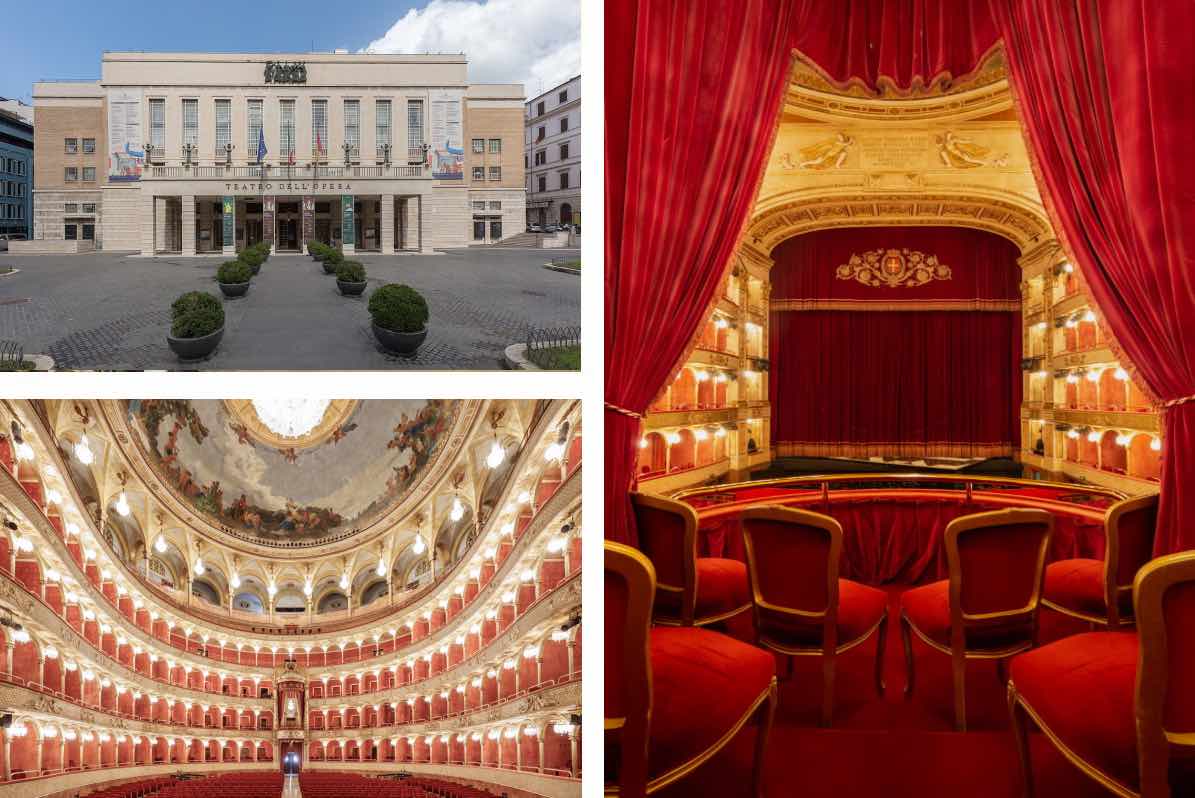
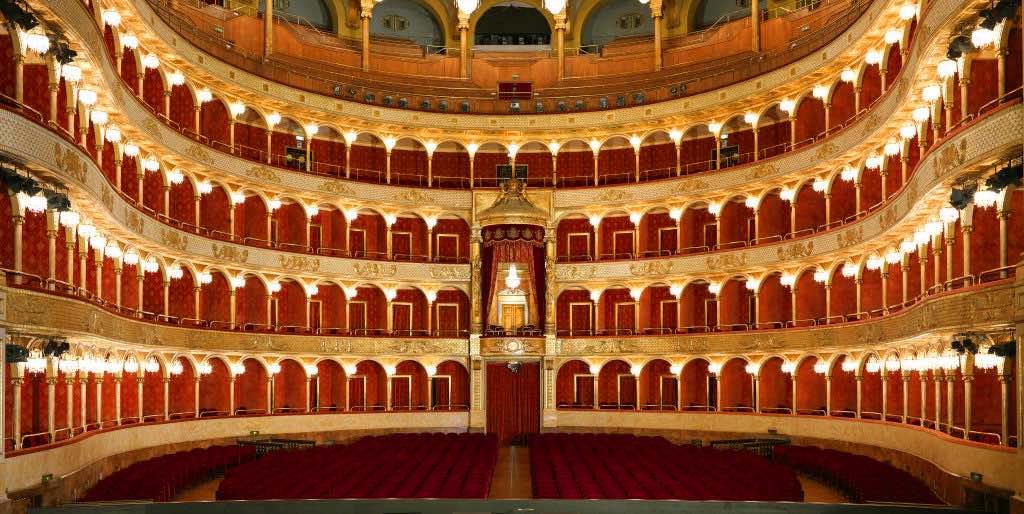
Designed by architect Achille Sfondrini, the theater was built with an elliptical design to enhance acoustics. Throughout the twentieth century it was the subject of multiple restorations:
- In 1926, the stage was expanded and the lighting system was modernized.
- In 1958, a complete restoration was carried out with the intervention of the architect Marcello Piacentini, adding elements of neoclassical style.
- In 2000, a modern restoration adapted the building to current technological standards, preserving its classic elegance.
The theater has capacity for about 1600 people and its main room, richly decorated in red and gold tones, is a visual masterpiece.
Great figures and productions
Some of the most influential figures in opera and ballet have passed through its stages:
- Maria Callas, who debuted in Rome in 1948.
- Luciano Pavarotti, protagonist of several productions between the 70s and 90s.
- Great directors such as Riccardo Muti, Zubin Mehta and Claudio Abbado.
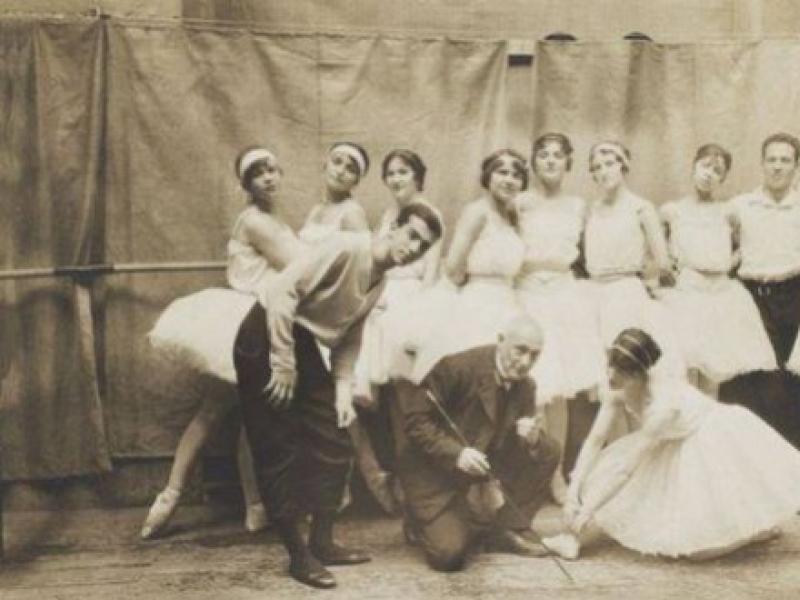
In addition, the theater has hosted ballets starring world-class artists, such as Rudolf Nureyev, whom you can learn more in our article about his life and career:
Rudolf Nureyev
Repertoire and seasons
The Teatro dell'Opera di Roma maintains an active opera and ballet season every year, with classic titles such as La Traviata, Tosca, Aida or El lago de los cisnes. It also promotes contemporary works and poorly represented operas.
The Opera Festival in the Termas de Caracalla, organized every summer by the theater, is one of the most outstanding cultural events in the city, where music merges with Roman history in an impressive outdoor setting.
Education and access to culture
The Teatro dell'Opera di Roma Foundation develops educational and cultural inclusion activities. It offers school workshops, talks open to the public, guided tours of the theater and special programs for young people and people with reduced mobility. His dance school and youth programs promote local talent, providing training opportunities to new generations of artists.
Relationship with other international theaters
The Rome Opera maintains collaboration agreements with important international theaters, such as the Royal Opera House in London, the Teatro alla Scala in Milan and the State Opera in Vienna. These exchanges strengthen the artistic excellence of their productions and promote a valuable cultural dialogue between major operatic institutions of the world.
Conclusion
The Rome Opera is much more than a historic building; it is a living institution that continues to promote lyrical art and dance in the 21st century. Its architectural legacy, its excellent programming and its commitment to the future make it an essential reference of the international cultural panorama.
Visiting it, either as a spectator or simply walking through its corridors, is an unforgettable experience for any lover of music, opera and history.
Share this content